
Unregistered users may browse the website, but in order to participate in the forums and view select pages (such as "Club Contacts" and "Classified Ads") a user account is required. Click HERE to email the webmaster and request a free account. The National DeSoto Club uses real names rather than pseudonyms. Notify the webmaster of your user name preference (Johnathon Doe vs. John Doe, etc.), preferred email address, and password request.

I have a 1941 Desoto Custom my brother in law and I are restoring. The car has been in his family since about 1948 when his great grandfather bought it at an auction. The car was driven until 1961 and then parked in a building until a few years ago when we got it out and started working on it. We got it running and driving, at least in the driveway. We cannot figure out the problem with the brakes. The problem is the pedal will stay up for two or three days and then it will go to the floor unless we push the pedal every day. We have replaced everything about the brakes and still have the problem. New brake master cylinder, lines, rubber hoses, wheel cylinders, and shoes. I have worked on a number of vehicles over the years and never had a problem like this unless there was an obvious leak. There are no leaks on this system. We first rebuilt the master cylinder that was on it and same problem. If anyone has an idea of what may be going on I would appreciate the help.
Thanks
Mark

Hi Mark, as a fellow 1941 DeSoto owner, I am glad to hear another one is on it's way to being back on the road!
If I am following correctly, you tried to rebuild the existing master cylinder that was on the car, then you tried replacing the master cylinder entirely with a new one, but still had trouble. The master cylinder has a valve in it that seats against the plug end of the master cylinder where the brake lines connect. The spring in the master cylinder keeps just enough pressure on that valve to keep it closed and seated to retain a small amount of pressure in the lines, but not so strong to over pressurize the lines and lock up the brakes.
If there are no obvious leaks or puddles of brake fluid, although everything in the system is new, I would still suspect something is not right with the master cylinder.
Here are some items to check:
- First thing to check, make sure the valve and rubber seat are positioned properly inside of the master cylinder. (See below for a detailed explanation)
- Inspect the master cylinder bore for any pitting, allowing it to seal enough while bleeding and pumping the brakes, but allowing brake fluid to seep past the rubber cups when not in use.
- If the master cylinder was honed to try to clean up the bore, it might have been over honed and the rubber cups aren't sealing fully. You might need to try a size up in rubber cups.
- Inspect the master cylinder piston rubber cups for any tears.
- Brake pedal push rod length, generally this should never need to be touched, but if someone in the past tried to correct something and adjusted the length of the push rod, it might not be allowing the piston in the master cylinder to have it's full travel.
- Unlikely, but check the brake return spring resistance at each set of brake shoes. It is possible that the brake return springs are too strong and are overcoming the spring pressure of the valve and spring in the master cylinder.
Regarding the master cylinder valve and seat. The exploded diagram of the master cylinder in the factory shop manual can be a little misleading depending on what type of valve & seat assembly you are using. The original type of valve assembly is all one piece with a tiny spring inside of it and is different than what is provided in modern master cylinder rebuild kits and reproduction master cylinders. If you follow the assembly order outlined in the original parts or shop manual, it will not work correctly. The rebuild kits available now require a rubber washer, which is usually provided, to be inserted before the metal valve can be installed. Without that rubber washer, the master cylinder will never pressurize. Often times the rubber washer that is supposed to pair with the metal valve gets placed in between the solid rubber cup and the metal piston, which is incorrect.
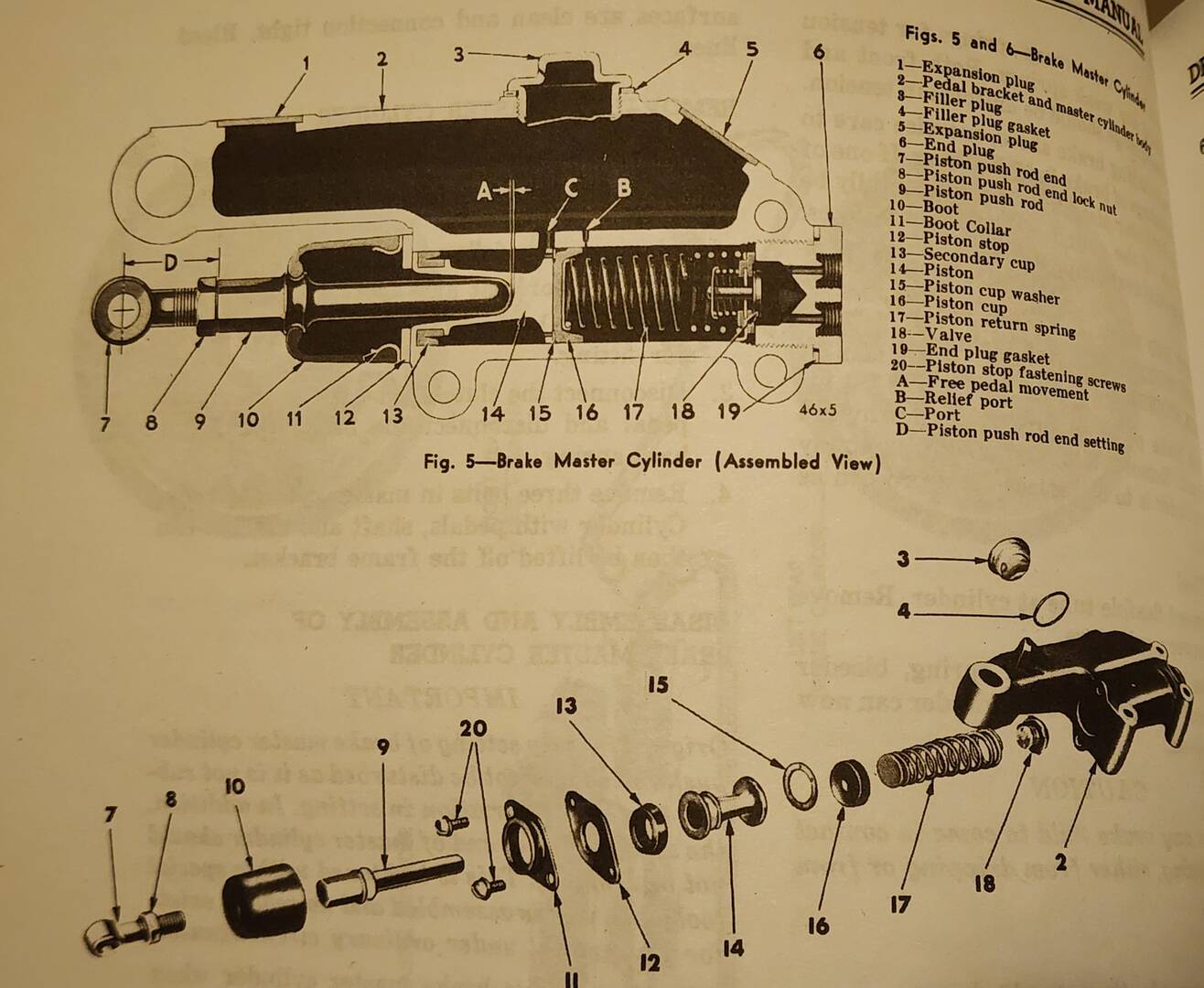
1936-54 Brake Master Cylinder internal pieces diagram using metal valve that requires a separate rubber seat that looks like a washer (Commonly found in all reproduction master cylinders and master cylinder rebuild kits):
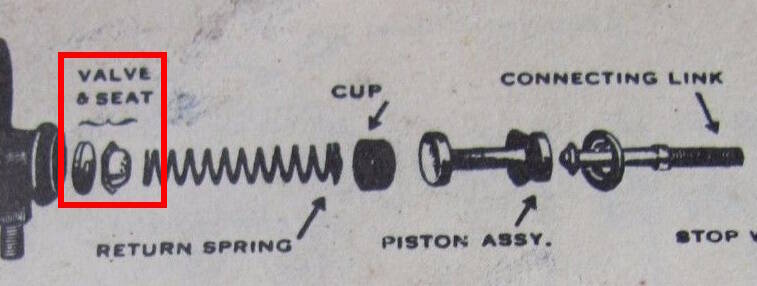
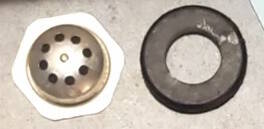

Carl thank you for the reply and advice. I have taken the new master cylinder apart and even rebuilt it with a new kit. I think I put everything in the right way but I will take it back off and check it. I have the front floor section out so it is easy to get to. Thanks also for the diagram. I hope I find something in the wrong order. If not I will try a larger cup. The one in it seems to fit really well and being a new master cylinder the bore looks good. I know the rubber washer is in it.
I like the picture of you with your car. A few years ago we went to Charlotte and met Dean Mullins’s when he had a green 41. I think he sold it since then. I attached a picture of ours the day we picked it up. I will let you know what I find in the master cylinder
Mark

Great and thorough advice here from Carl! I agree that the master cylinder sounds like the place to start based on the symptoms you mentioned. Best of luck with getting a family(-in-law) car back on the road! I'm not sure if it is just my computer, but I was not able to open the photo you attached.
@carlnutaitis - I won't steal your thunder regarding one of his other comments here!

David thanks for replying. I figure it has to be in the master cylinder to but after rebuilding the one that was in the car, purchasing a new one, and rebuilding the new one with the same results I thought it was time to ask questions. I plan to take the master cylinder off this weekend and see how it is assembled according to the drawing Carl sent.
I attached the picture again. Hope it shows for you this time
Mark
Hmmm, the photo still isn't showing up. I see the link, but nothing shows when I click on it. Maybe Carl can try it too and see if the same thing happens or if it's just my computer.
I cannot see the photo on my computer either. I'm not quite sure what the trouble is with the picture Mark is trying to attach. It does look like he is trying to directly upload it to the forums (which is preferred), so it is not linking to an external photo service. It is a supported image format (.jpeg) and I can see the picture is 4.80 MB in size. I can see three attempts to upload the same photo on the backend forum management dashboard, but I cannot see a preview of it in the management dashboard either. I also checked if I could see the picture through the website file manager, but it is not loading there either...
Another resource you might find helpful as you are going through the brakes is to read the Chrysler Master Technician Reference books. They are regularly for sale on eBay, but all of the books for the first few volumes have been scanned and made available for free online. Here is a link to the reference book that specifically focuses on the brakes and troubleshooting the master cylinder. https://www.web.imperialclub.info/Repair/Lit/Master/008/cover.htm
Thanks for not stealing my "thunder" David! 😆 Mark, you mentioned that you met Dean Mullinax at a Charlotte Auto Fair a few years back and saw his green 1941 DeSoto. How is this for a small world, yes, Dean did sell his '41 DeSoto approximately 3 years ago, and he sold it to me! Cosmetically, the car is in beautiful condition, but it was quite tired mechanically when I got it. Dean did a lot to correct the car during his ownership by removing a lot of "add-ons" previous owners put on the car and corrected some hack fixes. He got the engine and transmission running and working very well, but the rest of the mechanicals on the car still needed a lot of attention. It was neglected for many many years (prior to Dean's ownership) without regular fluid changes and grease jobs, so the kingpins, front and rear suspension bushings, were all worn pretty badly. It was fine to drive around locally, but I wanted it to be mechanically sound to take on long road trips....so I ended up tearing almost all of the mechanical components apart, aside from the engine and transmission. That process began once the salt hit the roads for the winter the first year (2023) I got the car. I am now on the upswing with degreasing and painting parts, and then rebuilding each component using all NOS rebuild kits (which took a while to find). I hope to get my '41 DeSoto back on the road this year, but I am a perfectionist, and I do not want to cut any corners.
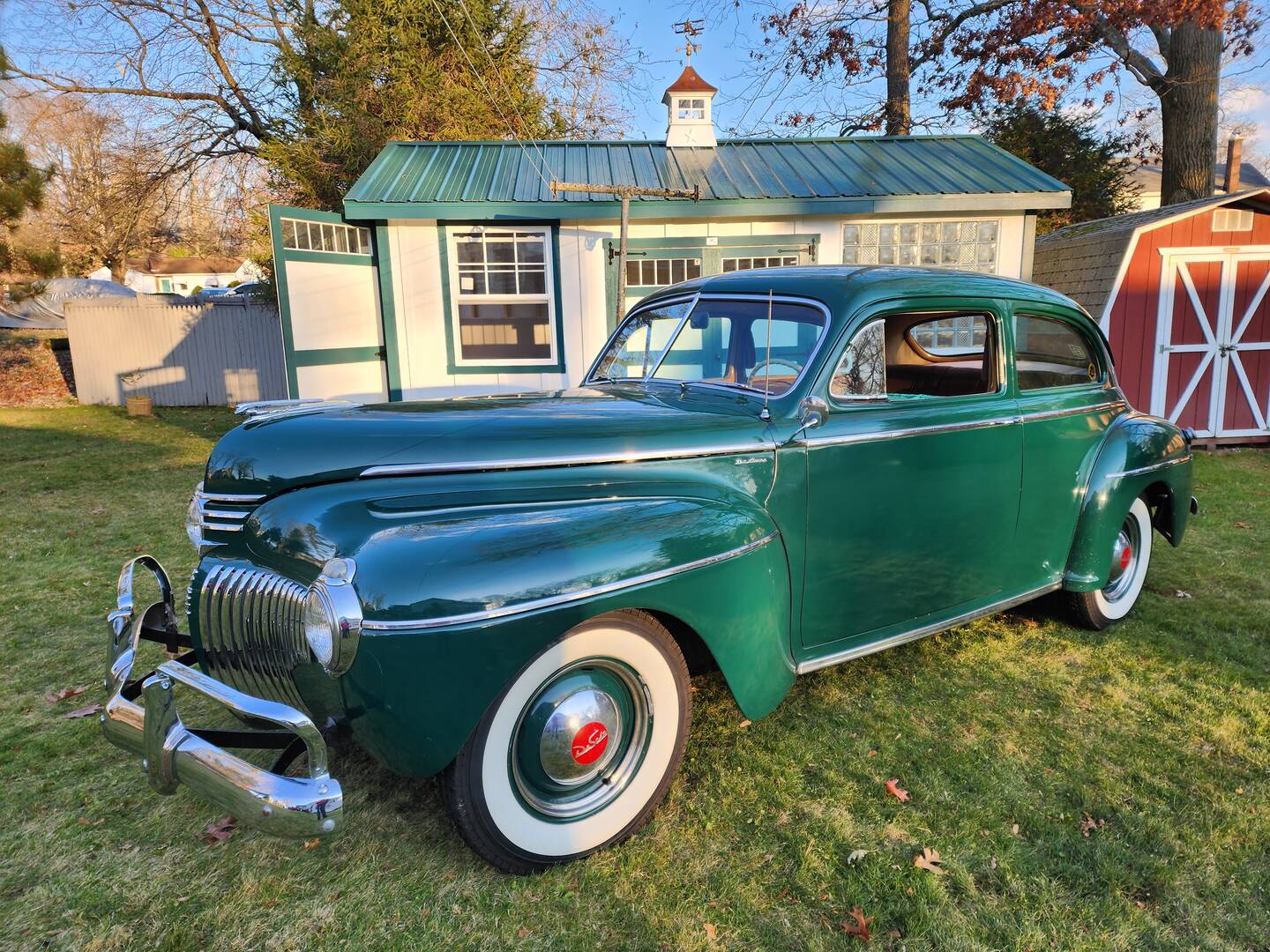
Here is a picture of my 1941 DeSoto DeLuxe 2-Door Sedan from November 2023, the last time it was out before I started disassembling it:
Carl I thought it looked like the car Dean had. It going to be really nice when you finish with it. We took the master cylinder off today and it is put together like the drawing you sent. I like your idea of a slightly larger cup to see if that helps. Wish I could figure out why the picture isn’t working. I think there are some instructions on the forum and I will see if I can find them. Maybe I am missing a step
Mark
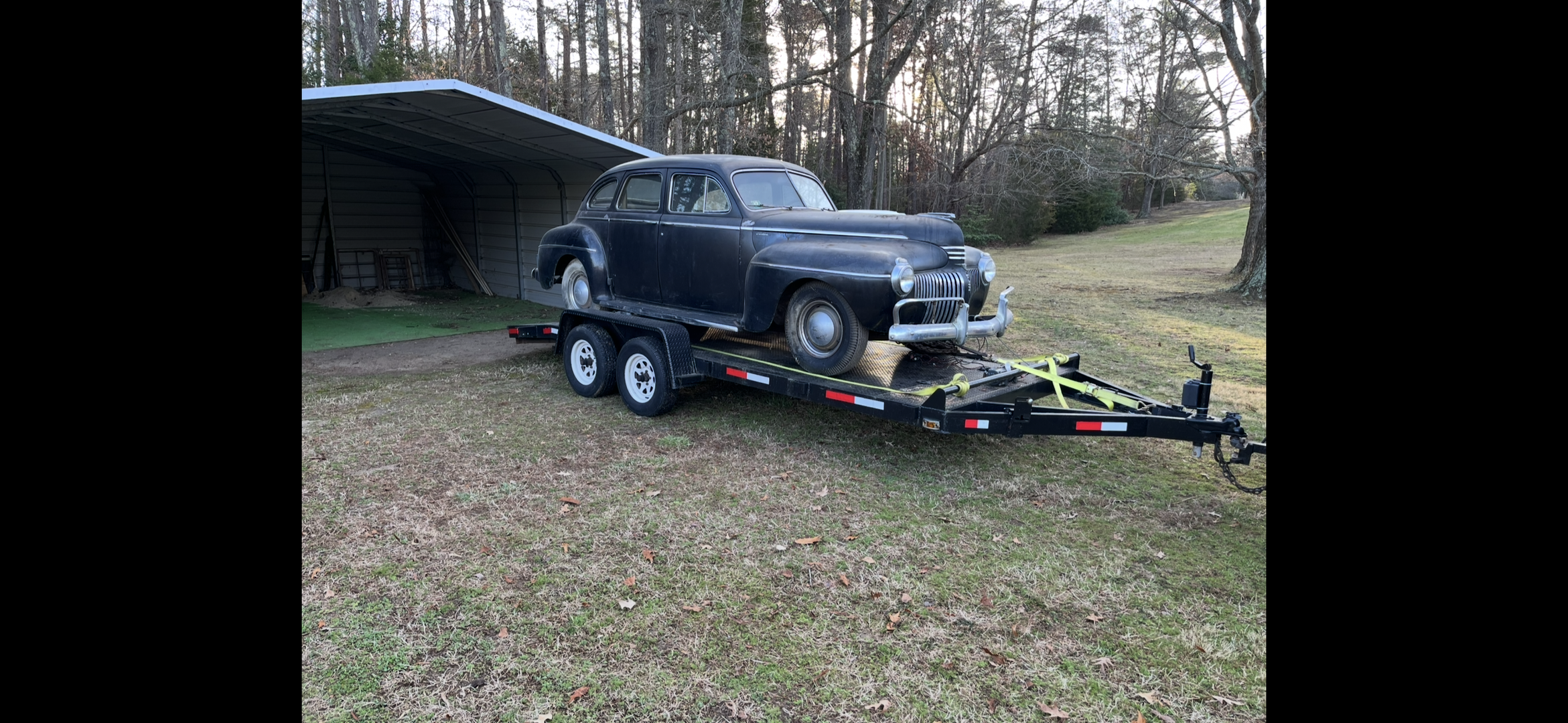
here is another attempt at the picture
@markponton success! I am able to see the photo now. It looks like it's pretty solid from what I can see in the photo. Best of luck with getting the brakes sorted out!
Hey guys. Been a few weeks since I had the chance to work on the car. Not much luck with the brakes so far. The master cylinder was removed and I noticed the bore was very smooth and no cross hatching so I did a quick hone on it. I purchased the next two bigger size cups but they are too big to go into the bore, so I put it back together with the parts it had since it is basically new and got good brakes like usual. The problem came again the next day when the brake pedal went to the floor again. I am to the point of buying an aftermarket brake and clutch pedal system that is designed to go under the floor like the original ones. It has a newer style master cylinder with separate connections for the front and rear brakes unlike the original.
Open to ideas anyone has

Mark, Rich Hartung with a 39 Desoto and you have the same MC as I do on my 39. When you rebuilt the MC did you bench bleed the unit prior to putting it into the car. Have you bleed the brakes starting at the right rear, then left rear, then right front and then end with the left front. It has to be done in that order. any signs of leakage at the back of the backing plates when the line screws in to the wheel cylinder. I had change out the bleeder screws but found an issue with two of the rear bleeder screws the fluid was leaking out around the threads. Put in different bleeder screws and this solved the issue.
Did you check the proportioning valve to see if the rubber is cracked or has a hole in it>
Rich Hartung
